Playing Quiet in a Loud World
By Winston Clayton / Fall 2025
The Original Garden And How I Lost It
I was twelve years old the first time I knocked on Don's door. I read a post on an online messaging board that promised to teach me the secrets of building fishing rods at a fraction of the cost of buying them. But rod wrapping is the domain of gruff old men and I could tell by the way Don looked at me that he did not think I would last a week. He walked me in through a rough, cluttered living filled with men at least fifty years older than me. Their eyes flicked up just long enough to register that a kid had wandered into their world. It was intimidating, like stepping into a place that had been turning long before I arrived.
I began my first rod soon after joining. It was a Calstar 90j, a rare rod blank that Steve, a 92-year-old man with Parkinson's disease, had been generous enough to sell to me. With only three-hour meetings every two weeks at Don's house, progress on my rod was painstaking. The group showed me how to take a long, plain, conical blend of graphite and glass and transform it into a usable fishing tool. There are purely functional ways to wrap a rod. Thread secures each guide in place, creating a straight path for the fishing line to follow. But, the infinite number of patterns that can be created with that thread elevates the pursuit to an art form. The group taught me how to use a pedal-controlled lathe to manipulate the thread and bring tiger wraps, chevrons, and fades to life on my rods.
As the years passed, wraps took days instead of hours. I created a small business and developed a habit of cutting off anything that fell short of what I imagined. What began in utility became obsession. But with every rod I finished, cracks spread through the world that had raised me. Steve grew quieter, and Don’s cough settled deeper into his chest. I could not quite feel it back then, but the edges of the garden I was building were beginning to wilt. The men who taught me were fading, and there was nothing my steady hands could do.
Just like that, I was swept away to UCSC. The move broke the rhythm of those evenings in Don’s living room. I stopped building rods, stopped showing up, and the craft slipped through my fingers. I did not notice how far I had drifted away until I looked up and realized I had no idea what was happening to them anymore. College was supposed to replace what I had lost, but it did not. The classes were massive, the days felt lonely, and despite doing everything right, I felt myself thinning out. By the end of the year, my compass pointed me back to San Diego.
MiraCosta was meant to be a reset, a place to rebuild the parts of myself that had been misplaced. I told myself to fear, to understand that a step back meant I might never take another step forward. A small step came in the form of admission to UCSD, but the growing pressure of the outside world meant I would not return to rod building. With each passing day, my garden's climate became more arid.
Where Light and Shadows Meet
“I am recovering from a cardiac arrest.” That was all Don said when I texted him about classes recently. I answered with the forsaken line: “If you need anything, let me know.” The ugliest response in the human vocabulary, a placeholder, and a betrayal of genuine care. A line you give when you want to help but do not know how. It made me nauseous. I had left that world so long ago, yet the message clung to me as if no time had passed at all.
I had always understood the truth of his fading health. I knew the cracks were widening years ago. But knowing the facts is not the same as facing them. Death is inevitable, yes, but inevitability does nothing to soften what it takes from us. It creeps in and strips you slowly; stealing your teachers, your friends, and the worlds you once inhabited until all that remains is a memory. A memory, as if that is supposed to heal you. Death is a wound that never fully closes; you learn to cover it, not cure it. You hope that something might eventually grow from the scar. The garden must change, I always understood that. But somewhere along the way I stopped tending my own. I was stuck peering into my neighbor’s back yard, watching their plants wilt, while mine silently collapsed. My lilacs were dust, my sunflowers charred, my poppies lay flat against the soil. With Don’s message, the ground shifted again. My garden was changing whether I tended it or not. It felt unfair, but fairness has never been of life’s concern.
Don is a flawed man. He belongs to a different era. A time when boys were expected to endure first and understand later. When I read 1984, he reminded me of Winston’s neighbor, shaped by a hardened world and accepting of the system around him. He's stubborn, blunt, and self admittedly bigoted. There is no better reflection of this than his living room, a cluttered mess that does not bend to the expectations of others. The creaky chairs, his decrepit dog coughing in the corner, a floor filled with tripping hazards. It's objectively unwelcoming. And yet, he opens his door for everyone. He gave me a place at his table, all the materials he could supply, not to mention countless hours of his time. Time measured in evenings, in quiet repetition, and in countless mistakes.
What unsettles me most is not the fact that Don is dying, it is that he is still here. His message did not close a chapter, it reopened one I had abandoned long ago. The landscape of my life has shifted dramatically, but the responsibility I feel for the people around me has not.
Responsibility in the sense of friendship of course, but also in the burden of carrying on a dying craft.
Carrying on a dying craft is a peculiar responsibility, it is not heroic or noticed. What I feel instead is the weight of representing the people who taught me, the ability to carry on their patience and standards. In that way, I understand why people push forward after loss. Not to prove resilience, but to keep something of the person present through an action rather than a memory.
Family Dinner
Don is not one to respond to texts thoughtfully, so when he wrote back, “I feel very privileged to receive your invitation,” it stood out. It was more formal than usual, more careful. I noticed it immediately. I sensed a feeling of gratitude that I had never seen from him.
I pulled into his driveway and saw him waiting outside. He was carrying a bottle of wine, his shirt was tucked in, and his hair was slicked back. I had never seen him look so put together. He is over eighty-years-old, but seeing him like that stirred something unexpected in me, something close to pride. It felt like I was seeing a side of him I had never bothered to look for. Up close, the changes were hard to miss. He had lost a lot of weight. He looked fragile. My stomach dropped and the guilt returned. Change is easier to ignore from a distance but in person, it attracts attention. Still, I was there. I had shown up. We did not talk about cardiac arrest. I did not ask. Instead, we caught up. Don talked the way he always has, with long stories, wandering details, and no clear point. He mentioned his gripes with the world, but all they did was bring a smile to my face. He was still himself. People often complain about this habit in older people, but I’ve come to appreciate it. If you listen long enough without interrupting, something worthwhile usually emerges and that night, it did.
My parents asked questions and let him speak, I mostly listened. Don started as a Navy Seal. In fact, to this day you can see the faint ink of a military tattoo on his arm. A piece of art long past its expiration. He was sent to Vietnam, contracted malaria, and was medevaced out almost immediately. When doctors asked where he was born, he said Chicago. He was sent there with nothing but the clothes he had on. He did not live in Chicago, but he made it work. He later became a contracted fire inspector and stayed in that job for thirty years. Large parts of his life remain unclear. He avoids talking about his wife or his children. I know only pieces; his wife was a smoker and likely died of lung cancer and his son lives in Tasmania working as a makeup artist. They do not speak. Listening to him that night, I began to understand that for him, rod building may have been less about the craft and more about building something stable after other things had fallen apart.
We finally talked about his cardiac arrest. He was dead for thirty-four minutes. The doctors told him he was a miracle. He spent a month in the hospital, and I never knew. He said his family visited only a few times. I tried to imagine what that must have been like, waking up to fluorescent lights, machines, and long stretches of being alone with the looming threat of death over your head. I could not. After he was released, doctors implanted a defibrillator in his chest. A few weeks later, it shocked him again. He has died twice in the last month. The second time, he did not return to the hospital. “Ambulances are too expensive,” he said in a very matter-of-fact way. My dad, a retired doctor, just chuckled to himself. He knew Don would never listen to what was good for him. He has already received the bill for the first stay: one-million dollars. One month of survival, added up into one giant bill.
What struck me most was what I learned about his life now. For years, I had seen a Japanese family living in his house. I had never asked about them, and mainly relied on context clues to build my understanding. That night, I learned they have been his tenants for over ten years, paying five-hundred dollars a month. Their children call him Grandpa. He helps manage the medical care of their son, Toa, who was recently diagnosed with diabetes. It became clear that the patience he taught through rod building extended far beyond rods. In a world focused on speed and efficiency, Don lives differently. He values usefulness over profit and consistency over recognition. Without calling it that, perhaps without even realizing that is what he has created, he has built a small community by simply paying attention and showing up.
A simple dinner can hold more than you expect. I have known Don for years, yet I left that night understanding him differently. He is not just a great teacher, but someone still very much here, and still carrying the weight of his life. Listening to him that night, I understood that attention is limited. You do not get to decide when it stops, or is drawn to the next thing. What you are given instead is the choice to show up while it is still present. Don’s life is unfinished, complicated, and messy, but it is not over. As long as he is still here, I do not want to just remember him fondly, but remain present.
Planting Quiet in a Loud World
Rod building is a form of rebellion, even if it is not dramatic. It is inefficient and largely invisible in a world that optimizes. Nothing about that time produces results that can be measured. I have spent entire afternoons doing nothing that would count as progress, simply staring at a pattern, wondering if Steve would like it. I return to it not to get better, but to steady myself. In that sense, rod building resists more than modern efficiency, it resists the idea that worth must be proven. That we must place ourselves in hierarchies and distinguish ourselves through exceptionalism. I am not preserving rod building to save it from extinction. I continue it as a sort of meditation, a way of returning to something that asks very little and gives just enough to keep me coming back.
I am still gathering the parts of myself that were misplaced. My quarter has ended, and in many ways I feel back where I started in Santa Cruz. Worse, I feel behind academically. That disappointment sits heavy. I think often about the Buddhist idea of Samsara, “the cycle of life: birth, death, and rebirth in which suffering beings are trapped” (lionsroar.com). I left because I knew I was not in the right place, and yet I have returned to a home that may be keeping me unchanged. Comfort can be just as limiting as failure. Rod building is not an escape from my situation, but it does orient me to my surroundings. It is a reminder of the importance of slow progress and the importance of repetition. I continue rod building, not by trying to cling to my past or pretend the world is where it was. Rod building is fading from existence. Don knows, I know, and every member of the class knows.
Fishing, the natural cousin of rod building, is different. Fishing is not about preservation at all. It is one of the few activities that takes nothing from the outside world. Once you are bobbing up and down with the waves, looking up at the sky with a slight queasiness, your phone loses its purpose and you gain a sense of aimlessness. It forces you to become patient, to enjoy where you are because you may end up catching nothing. For me, rod building made that kind of disconnection possible. I fished long before I ever built a rod, but it was not until I learned the patience of rod building that I could fully begin to appreciate the experience of fishing. Rod building taught me how to wait without resentment or anticipation, and how to value the act itself rather than what it produces.
The light in our lives can not erase the shadows. But it can exist beside them, nagging them for more space. This is where light and shadows meet: not in the idea of perfection or salvation through rod building, but in attention stretched across time. Don never promised me he would exist forever. What he offered was attention, the value of caring about something small for a long time. The importance of mixing epoxy slowly, the value of measuring the rod down to the last millimeter, how to sit still for hours focusing on the details. I have cut off hundreds of yards of thread, not because it matters to the world that a wrap is imperfect, but because for me rushing makes the work dishonest.
In a room full of aging hands and creaky bodies, rod building is far from outrunning impermanence. It's unquantifiable, devoid of external validation, and filled with haggard fisherman. But that's what makes things so great, nothing is optimized. Nothing is hurried. Time is not beaten to a pulp, it is passed carefully in the isolation of your own mind.
The garden I abandoned years ago has turned to desert. My wraps are no longer as risky or fun, they are more grounded in a sense of utility and practicality. The routines, the patience, the quiet companionships have dried up. College, comfort, and the pressures of life elsewhere have left my oasis barren. Yet, deserts are not final; they wait. Wait to be cared for, to be watched, to be given attention that chooses to return. I ask myself: how do I make the desert become an oasis? The answer, like rod building, is not dramatic. It lies in the simple act of showing up. Each hour I spend picking out thread, each afternoon I go out on the water instead of staring out my window, each conversation that plunges below the surface. It nourishes the soil, encourages life to sprout up. Progress is invisible, but it is real. The oasis is not created with speed or achievements; it grows because I consciously choose to inhabit it. It grows because I value the patience I was taught, and because I carry forward something that might otherwise vanish.
Out on the water, I get to just focus on the next cast. I laugh freely, watch my jig sink into the depths, and feel a quiet thrill in the patience. Rod building taught me how to wait without expectation, to value the act itself rather than the outcome. Using a rod I built myself adds a different layer of satisfaction. Every drop or cast is a reminder of hours spent thinking, wrapping, and perfecting something that came from my hands. It feels alive in a way something from a factory never could. The mistakes, though I persistently try to avoid them, add a unique quality to the experience. A sort of exploration that is fading from the world. Fishing amplifies the lessons of rod building, showing me how to let go, inhabit moments fully, and feel small in the presence of something much larger. It is not about control, it is about inhabiting a world with presence. That presence, cultivated slowly and quietly, is what allows me to reconnect with the world on my own terms. It reminds me that life is not measured with trophies, but in the attention we give to what matters to us, however small or unseen it may be.
Gardens are fragile places, deserts are persistent, and the oasis is my responsibility. I do not tend it to be admired or remembered. Each rod I wrap, east line cast into the unknown, each pause I allow for thought or stillness, stretches my attention through time. The oasis is built on the understanding that life will not pause for me, that the people I care about will not wait, but I can choose to create spaces of permanence, however small. This is how I carry forward what I was given. This is how I honor Don, Steve, and the countless others who have shaped me. By showing up, by giving my attention, by letting the craft anchor me, I make the desert bloom. The garden, once lost, is slowly returning. It is not as it was, but as something new, resilient, and alive. And in that growth, I am reminded that presence, patience, and care are the true measures of life’s value.
Thank you for a wonderful experience. For what it's worth, your class helped my garden grow. I hope you can continue to teach in your style. To add some context to my essay, here are some moments that inspired me:
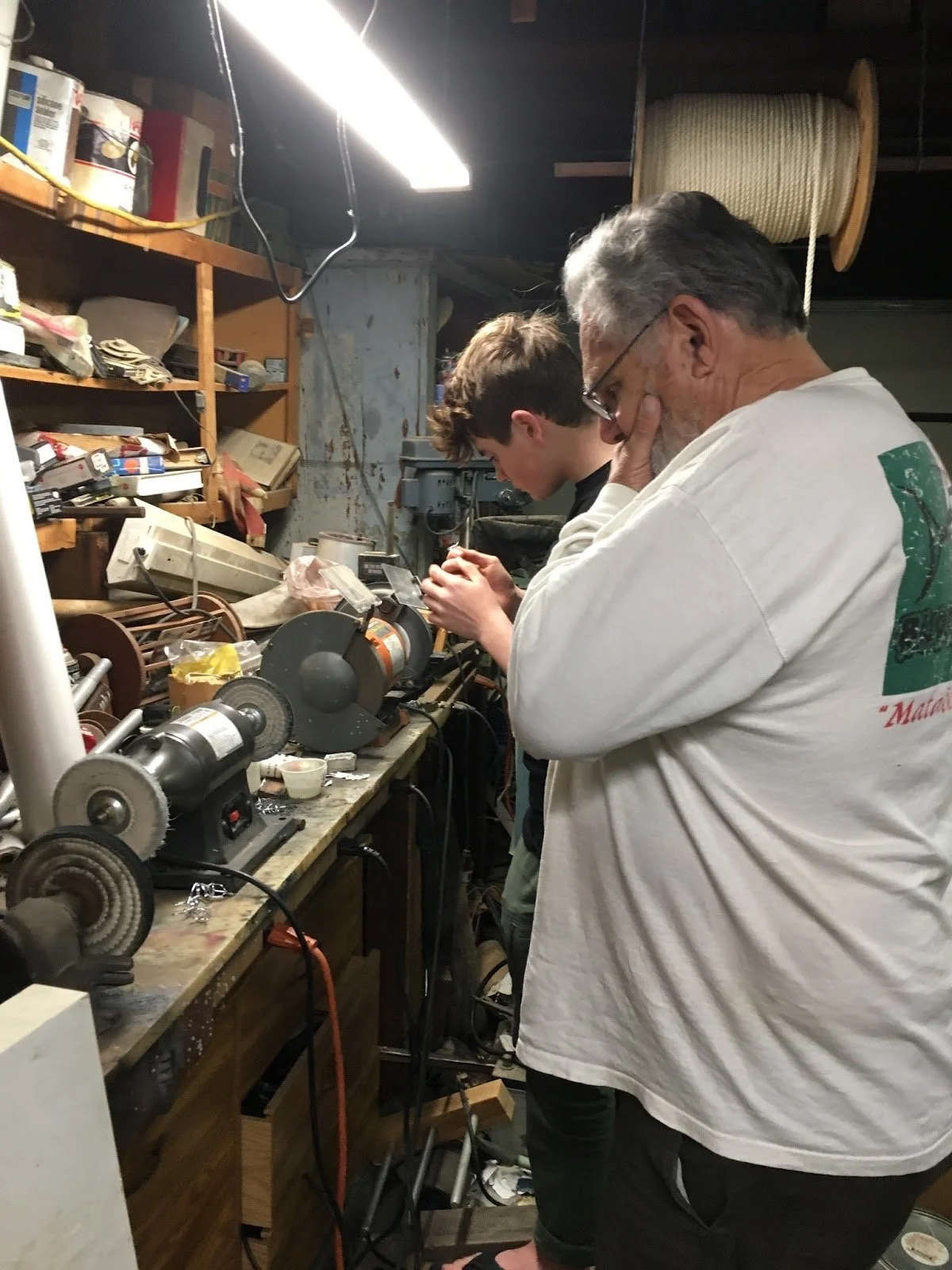
An image of my early days in rod building with Don. Here, I am grinding fishing guides down to an edge so that the thread can lay evenly on them.
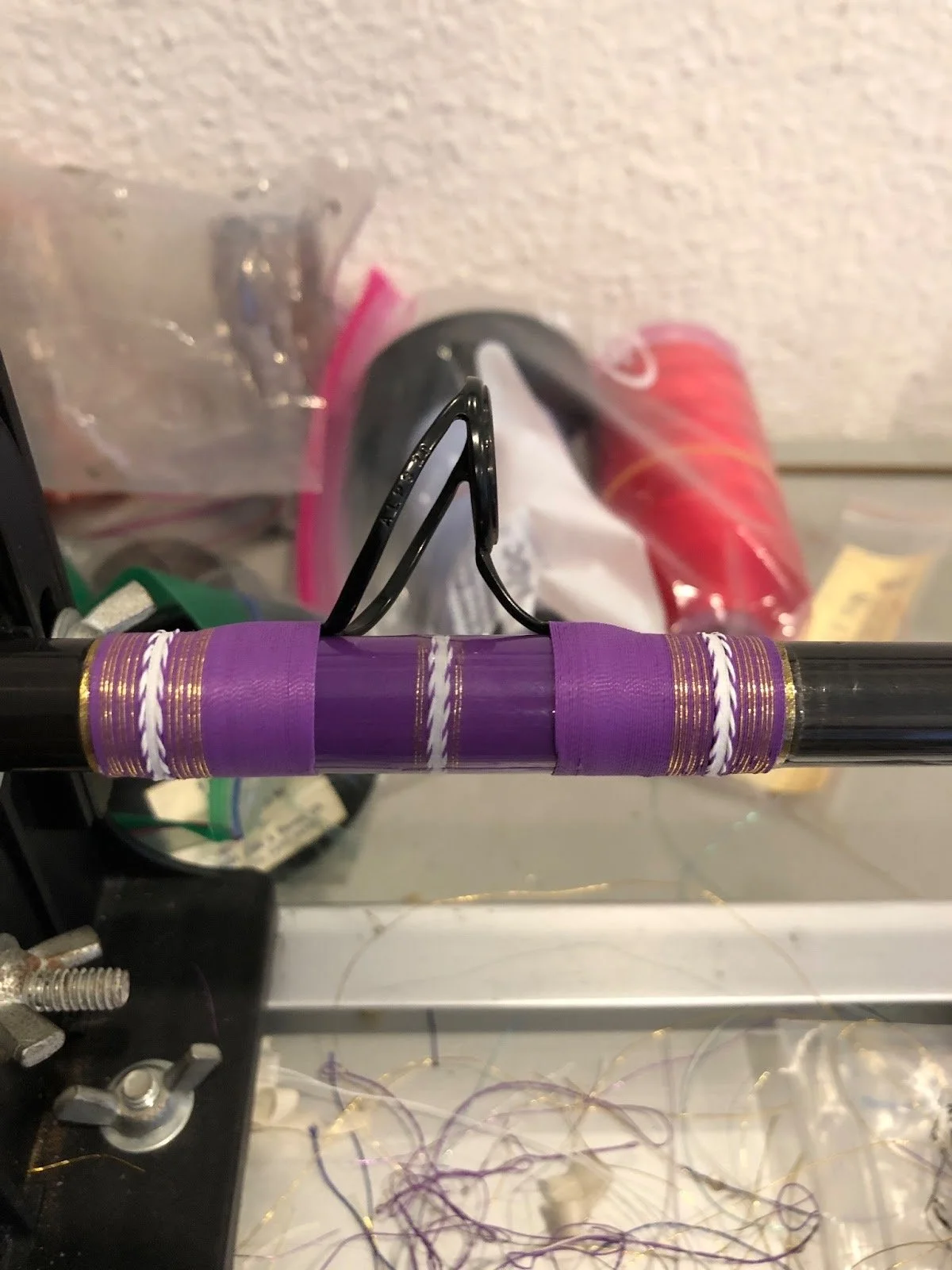
Some of my earlier work, you can see the pile of thread in the background. This was far from perfect, but it was my start.
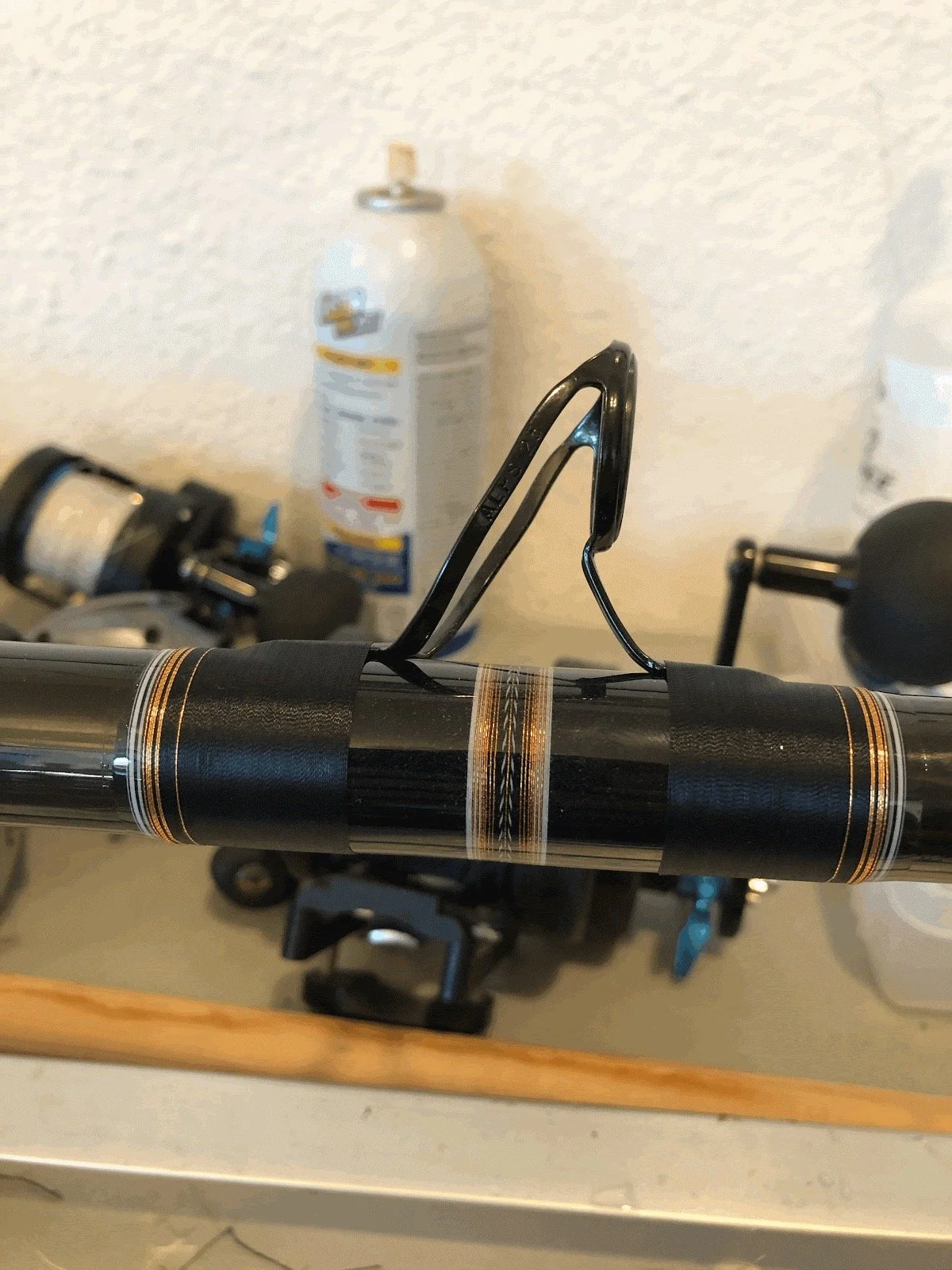
A nice progression here: tighter patterns, more intricate thread work.
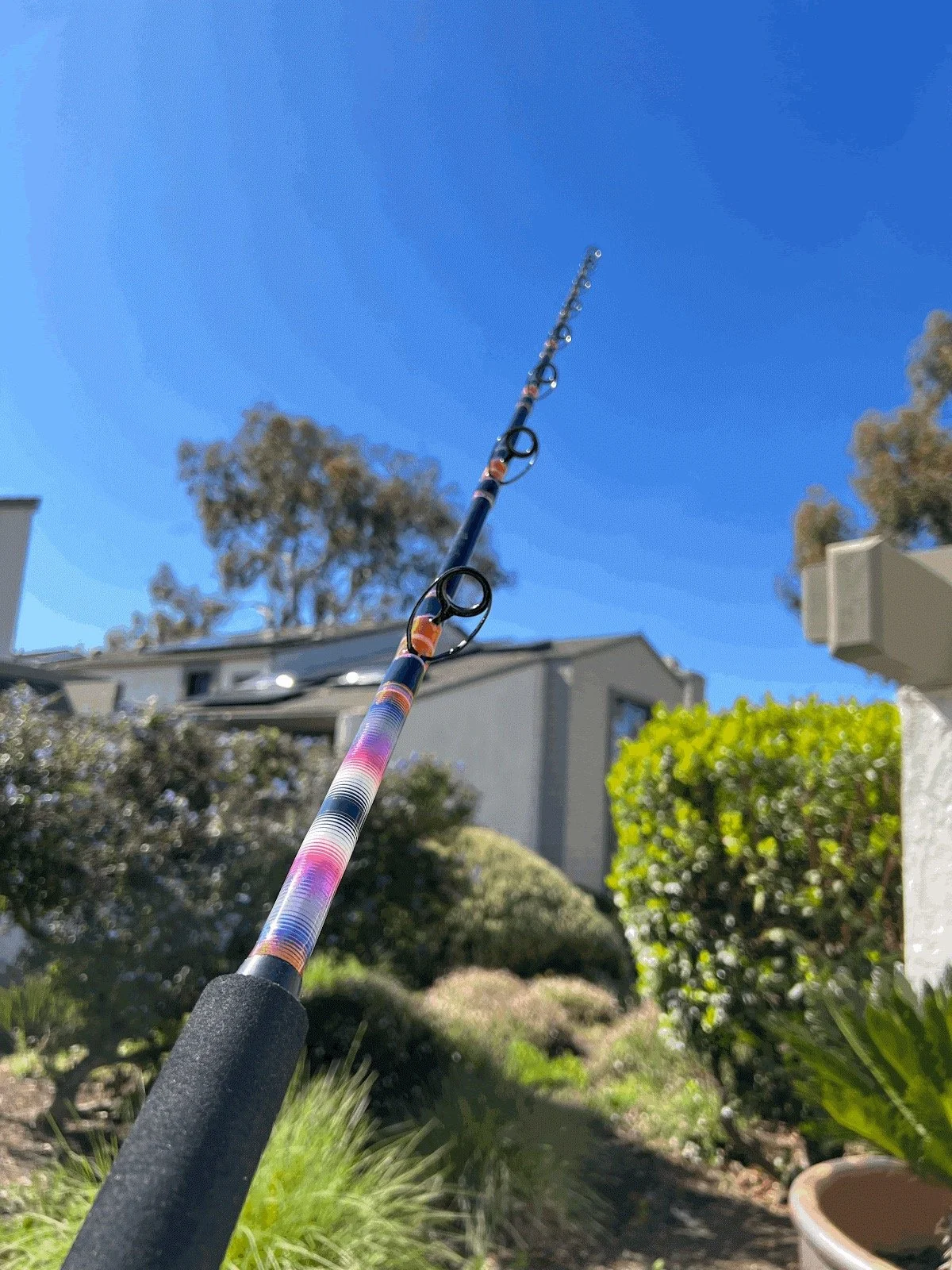
One of my proudest rods, one I made for my grandfather.
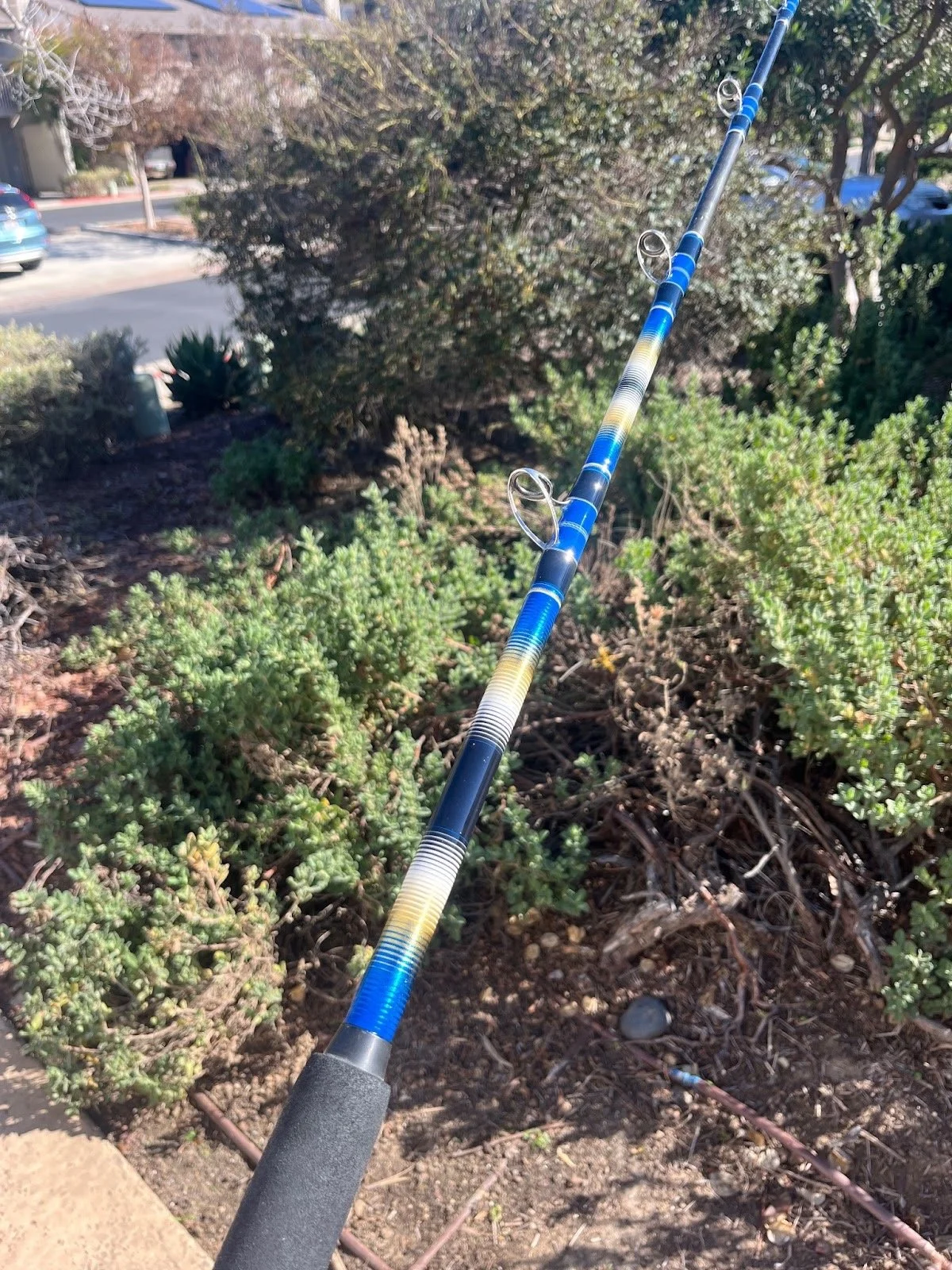
A recent return to a rod that laid unfinished on my wall for years. I finished this rod during finals week. This essay served as inspiration to complete the job.
Works Cited
“Samsara.” Lion’s Roar, Lion’s Roar Foundation. Accessed 12 Dec. 2025.
Nesti, Fido, and George Orwell. 1984: The Graphic Novel. First U.S. edition, Houghton Mifflin Harcourt, 2021.
Odell, Jenny. “The Case for Nothing” from Doing Nothing. Melville House, 2019